


Introduction
Target Company Research Checklist is a practical framework for evaluating a company before you apply for a job, pitch a service, build a partnership, make a sales approach, or conduct competitive research.
Good company research goes beyond checking a website and reading an “About Us” page. You need to understand what the company does, who it serves, how it makes money, what problems it faces, who its competitors are, and where your skills or business can create value.
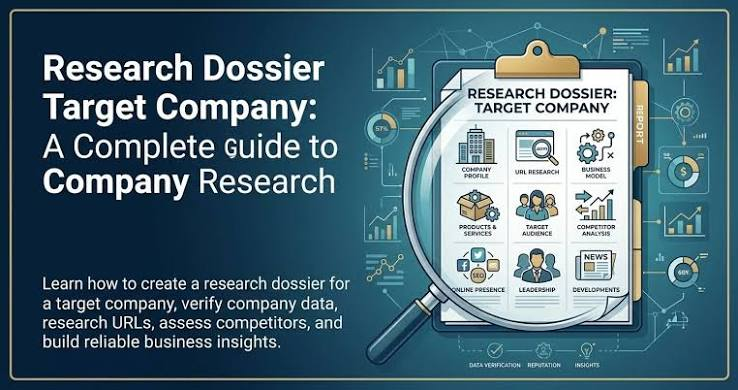
This Target Company Research Checklist covers the essential areas to investigate, including company background, products and services, leadership, customers, competitors, financial signals, technology, reputation, hiring activity, online presence, and potential opportunities. It also explains how to organize your findings and avoid common research mistakes.
What Is a Target Company Research Checklist?
A Target Company Research Checklist is a structured list of information you should collect and evaluate before making an important decision involving a company.
Instead of researching randomly, the checklist gives you a repeatable process. It helps you separate useful information from assumptions and identify the details that actually matter to your objective.
For example, a job seeker researching a U.S. technology company may focus on:
- Company culture and values
- Current job openings
- Leadership and team structure
- Products and services
- Recent company developments
- Employee reviews
- Skills the company needs
A marketing agency researching the same company may focus more on:
- Website performance
- Content strategy
- SEO visibility
- Competitors
- Customer acquisition
- Social media activity
- Backlink profile
- Marketing opportunities
The right checklist therefore depends partly on why you are researching the company.
Why Is Target Company Research Important?
Target company research helps you make decisions based on evidence rather than assumptions.
Whether you are a candidate, salesperson, investor, consultant, marketer, or potential business partner, understanding the target company can improve the quality of your decision.
The main benefits include:
Better Decision-Making
Research helps you determine whether a company is genuinely suitable for your goals.
You can compare its products, reputation, business model, leadership, market position, and opportunities before committing your time or resources.
More Personalized Communication
If you are contacting a company, generic messages are rarely as effective as relevant ones.
Research allows you to mention a specific product, business challenge, recent initiative, or market opportunity instead of sending the same message to everyone.
Stronger Competitive Analysis
Company research can reveal how a business positions itself against competitors.
You can compare pricing, services, target customers, content, technology, branding, and customer experience to identify areas where the company is strong or vulnerable.
Reduced Risk
Research cannot eliminate business risk, but it can help you identify warning signs before you move forward.
For example, inconsistent information, poor reputation, unclear ownership, weak customer communication, or declining business activity may justify additional investigation.
Target Company Research Checklist
Use the following checklist as your core research framework.
1. Company Background
Start with basic company information.
Find out:
- Official company name
- Headquarters or primary operating location
- Year founded
- Industry
- Company size
- Ownership structure, where available
- Main markets served
- Parent company or subsidiaries
- Official website
- Main social media profiles
For U.S. companies, also check reliable public business records and official regulatory sources when the information is relevant to your research.
The goal is to establish a clear identity before analyzing the company further.
2. Products and Services
Determine exactly what the company sells.
Do not simply copy product descriptions. Try to understand the customer problem each product or service solves.
Ask:
- What are the company’s primary products?
- Which services generate the most attention?
- Who uses them?
- What makes the offering different?
- What problem does the company solve?
- Is the offering aimed at consumers, businesses, or both?
- Does the company operate on subscriptions, one-time purchases, contracts, or another model?
Understanding the offering gives you context for almost every other part of your research.
3. Target Customers
A company’s ideal customer tells you a great deal about its business strategy.
Identify:
- Customer demographics
- Business customer profiles
- Industries served
- Geographic markets
- Customer needs
- Buying motivations
- Common pain points
- Customer expectations
Look at case studies, testimonials, product pages, FAQs, reviews, and marketing materials for clues.
If the company serves multiple audiences, separate them rather than treating every customer as one group.
4. Business Model
Next, determine how the company generates revenue.
A business model may involve subscriptions, advertising, direct sales, professional services, licensing, commissions, marketplaces, or a combination of several approaches.
Consider:
- Main revenue sources
- Pricing structure
- Sales channels
- Customer acquisition model
- Recurring versus one-time revenue
- Geographic expansion
- Partnerships
You do not always need private financial information. The objective is to understand the basic economic engine of the company.
5. Leadership and Key Decision-Makers
Identify the people responsible for important company decisions.
Research:
- CEO or founder
- Executive team
- Department leaders
- Marketing leadership
- Sales leadership
- Human resources leadership
- Relevant decision-makers for your objective
LinkedIn and the company’s official website can be useful starting points.
If you are pitching an SEO service, for example, researching the marketing leader is usually more useful than contacting someone in an unrelated department.
6. Company Mission, Values, and Culture
A company’s stated mission can help you understand what it wants to achieve.
Review:
- Mission statement
- Core values
- Careers page
- Employee policies
- Diversity and inclusion information
- Leadership communication
- Company blog
- Public announcements
Do not assume that a company’s published values perfectly represent its internal culture. Compare official claims with credible employee feedback and other available evidence.
This distinction is important when researching an employer.
7. Competitor Research
Identify the company’s major competitors and compare them carefully.
Look at:
| Research Area | Target Company | Competitor |
| Main offering | What it sells | What competitor sells |
| Target market | Who it serves | Who competitor serves |
| Pricing | Available pricing information | Competitor pricing |
| Positioning | Main value proposition | Competitor positioning |
| Content | Main content strategy | Competitor content |
| Reviews | Customer sentiment | Customer sentiment |
| SEO | Search visibility | Competitor visibility |
Focus on meaningful differences rather than collecting information simply for the sake of comparison.
8. Online Presence
Analyze how the company appears across the internet.
Review:
- Website
- Google search presence
- YouTube
- Industry directories
- Review platforms
- News coverage
- Business listings
Check whether company information is consistent across important profiles.
Inconsistent names, outdated descriptions, broken links, or abandoned social profiles can reveal areas that require further investigation.
9. Website and SEO Analysis
For marketing or SEO research, the company website deserves special attention.
Evaluate:
- Website structure
- Page quality
- Search intent alignment
- Title tags and meta descriptions
- Heading structure
- Internal linking
- Blog content
- Service pages
- Location pages
- Technical performance
- Mobile usability
- Indexable content
- Backlink profile
- Competitor visibility
Look for opportunities, not just problems.
For example, if a company has strong services but weak informational content, there may be an opportunity to build helpful content around customer questions and relevant search topics.
10. Content Strategy
Study what the company publishes and why.
Review:
- Blog posts
- Guides
- Case studies
- White papers
- Videos
- Webinars
- News releases
- FAQs
- Product education
Ask whether the content actually helps customers make decisions.
Also identify content gaps. If competitors answer important questions that the target company ignores, that difference may represent a useful opportunity.
11. Customer Reviews and Reputation
Customer feedback can provide information that company marketing materials do not.
Look for recurring themes involving:
- Product quality
- Customer service
- Delivery
- Pricing
- Communication
- Reliability
- Technical support
- User experience
Avoid treating one review as definitive evidence.
Instead, look for patterns across multiple credible sources. Positive reviews can reveal strengths, while repeated negative feedback may identify operational or customer-experience issues worth investigating.
12. Hiring Activity
Current and recent job openings can reveal where a company is investing.
Examine:
- Open positions
- Departments hiring
- Required skills
- Seniority levels
- New geographic locations
- Repeated job postings
For example, several openings in sales may indicate an expansion effort, while increased hiring in engineering may suggest product or technology development.
Hiring information is a signal, not proof of a specific business strategy, so interpret it alongside other evidence.
13. Recent Company Developments
Check for recent developments before reaching a conclusion.
Look for:
- Product launches
- New partnerships
- Acquisitions
- Leadership changes
- Expansion
- Funding announcements
- New locations
- Major contracts
- Rebranding
- Regulatory developments
Recent information is particularly important when your research will influence a job application, sales pitch, investment decision, or partnership discussion.
14. Technology and Tools
For technology-related research, determine what systems the company appears to use.
Depending on your purpose, investigate:
- Website platform
- Analytics technology
- CRM
- Marketing automation
- Advertising platforms
- E-commerce technology
- Customer support tools
- Security technologies
Technology information can help agencies, consultants, developers, and sales professionals determine whether their solutions are compatible with the company’s existing environment.
15. Identify Opportunities and Risks
The final stage is to turn research into actionable findings.
Create two simple lists.
Potential opportunities:
- Underserved customer segments
- Weak competitor positioning
- SEO content gaps
- New market opportunities
- Hiring needs
- Poor customer experience areas
- Partnership possibilities
- Product gaps
Potential risks:
- Reputation problems
- Heavy dependence on one market
- Unclear business positioning
- Outdated website
- Declining customer interest
- Frequent leadership changes
- Regulatory concerns
- Weak differentiation
The objective is not to make dramatic conclusions. It is to identify areas that deserve further attention.
How to Conduct Target Company Research Step by Step
A simple research workflow can make the process faster and more accurate.
Step 1: Define Your Objective
Before searching, write down what you need to know.
Are you researching the company for:
- A job application?
- A sales prospect?
- An SEO campaign?
- Competitive analysis?
- A partnership?
- Investment research?
Your objective determines which information deserves the most attention.
Step 2: Start With First-Party Sources
Begin with the company’s official website, careers pages, press releases, investor information where applicable, and official social profiles.
First-party sources are useful for understanding what the company itself says about its products, services, people, and strategy.
Step 3: Verify Important Claims
Do not accept every statement at face value.
Cross-check important information using credible third-party sources, regulatory databases, reputable publications, industry organizations, or other authoritative references where appropriate.
Step 4: Organize Your Findings
Use a spreadsheet or research document with columns such as:
Topic | Finding | Source | Importance | Action
This makes it much easier to distinguish facts from assumptions.
Step 5: Turn Research Into Action
Your research should eventually answer one important question:
“What should I do with this information?”
A job seeker may customize a cover letter. A salesperson may personalize an outreach message. An SEO professional may prepare a website opportunity report. A business owner may decide whether the company is a suitable partner.
Common Target Company Research Mistakes
Even detailed research can become ineffective if the process is poorly managed.
Relying on One Source
One website rarely provides the complete picture. Use multiple credible sources when information matters to your decision.
Confusing Opinions With Facts
Employee reviews, social media comments, and online discussions can be useful, but they represent individual experiences.
Treat them as evidence to consider, not automatic facts.
Using Outdated Information
Company leadership, products, pricing, locations, and strategies can change.
Always pay attention to publication dates and prioritize recent information when evaluating current conditions.
Researching Without a Goal
Collecting hundreds of facts does not necessarily produce better research.
Focus on information that can influence your decision.
Making Conclusions Too Quickly
A single negative review or an unusual job posting does not prove that a company has a serious problem.
Look for patterns and corroborating evidence.
Ignoring Competitors
Understanding the target company without understanding its competitive environment can leave major gaps in your analysis.
Tips for Better Company Research
For more useful results, follow these practical principles:
- Start with a specific research question.
- Prioritize first-party sources.
- Verify important claims.
- Separate facts from interpretations.
- Check dates carefully.
- Compare competitors.
- Look for patterns rather than isolated incidents.
- Record the source of important findings.
- Focus on actionable information.
- Update your research before making a major decision.
What Are the Limitations of Company Research?
Company research has limitations because publicly available information is never the complete picture.
Private companies may disclose limited financial information. Employee reviews can be subjective. Job postings may not always reflect actual hiring priorities. Search rankings can change. Third-party databases can contain outdated information.
Therefore, research should be treated as a decision-support tool rather than absolute proof.
For high-stakes decisions, use appropriate professional, financial, legal, or regulatory advice where necessary.
Frequently Asked Questions
What is included in a Target Company Research Checklist?
A Target Company Research Checklist typically includes company background, products and services, customers, business model, leadership, competitors, reputation, website, SEO, content, hiring activity, technology, recent developments, opportunities, and potential risks. The exact checklist should be adjusted according to whether you are researching the company for employment, sales, marketing, investment, or partnership purposes.
How do I research a company before applying for a job?
Start with the company’s official website and careers page. Learn about its products, customers, leadership, mission, recent developments, and open positions. Review credible employee feedback and recent company news as well. Use your findings to understand the role and personalize your application around the company’s actual needs rather than relying on generic statements.
What are the best sources for company research?
The best sources depend on your research objective. Start with the company’s official website, careers pages, regulatory filings where applicable, official announcements, and verified social profiles. Then use reputable news organizations, industry publications, professional networks, customer review platforms, and other credible third-party sources to verify information and understand perspectives outside the company.
How long should company research take?
The appropriate research time depends on the purpose and importance of the decision. A basic prospect review may take a short session, while competitive or investment research can require much deeper investigation. Rather than focusing only on time, focus on whether you have answered the important questions, verified key information, and identified actionable findings.
Why should I research competitors during company research?
Competitor research provides context. A company may appear strong or weak when viewed alone, but the competitive landscape can change that conclusion. Comparing products, positioning, pricing, content, customer feedback, and market presence can reveal advantages, weaknesses, differentiation opportunities, and areas where the target company may need to improve.
Conclusion
A strong Target Company Research Checklist helps you move from basic information gathering to meaningful business analysis.
The most important areas to examine include the company’s background, products, customers, business model, leadership, culture, competitors, online presence, SEO, content, reputation, hiring activity, technology, and recent developments.
The key is not to collect as much information as possible. Instead, collect relevant, current, and verifiable information that helps answer your specific research objective.
Before contacting a company, applying for a position, proposing a partnership, or making a business decision, take your findings and turn them into clear actions.
