



Introduction
Company Research Report Examples can help students, business professionals, investors, marketers, and researchers understand how to collect, organize, and present important information about a company. A strong company research report explains what a business does, how it operates, who its customers are, how it performs financially, and what opportunities or risks may affect its future.
This guide explains what a company research report is, what information it should contain, how to research a company, and how to structure a professional report. It also provides practical company research report examples that can be adapted for U.S. companies, competitors, prospects, investment research, and business analysis.
What Is a Company Research Report?
A company research report is a structured document that analyzes a business using reliable information about its operations, market, products or services, financial performance, competitors, customers, leadership, and future prospects.
The purpose is to turn scattered business information into a clear analysis that helps readers make informed decisions.
Depending on the purpose, a company research report may be prepared for:
- Business planning
- Market research
- Competitive analysis
- Investment analysis
- Sales prospecting
- Academic research
- Due diligence
- Strategic planning
- Partnership evaluation
- Marketing research
A good report does more than describe a company. It connects facts and evidence to meaningful conclusions.
Why Are Company Research Reports Important?
Company research reports help readers understand a business before making an important decision. Instead of relying on assumptions, the reader can review organized evidence about the company’s position, performance, and risks.
For example, a sales team researching a potential client may examine its industry, business model, locations, products, recent developments, and decision-makers. An investor may focus more heavily on financial statements, revenue trends, debt, profitability, competitive advantages, and risks.
The most useful reports answer three basic questions:
- What does the company do?
- How well is the company performing?
- What factors could affect its future?
Key Sections of a Company Research Report
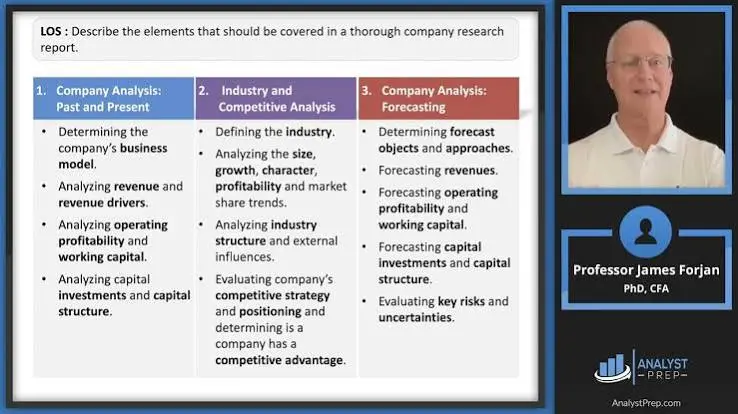
A professional company research report usually contains several core sections. The exact structure can change depending on the purpose and available information.
1. Company Overview
Start with a concise overview of the company.
Include information such as:
- Company name
- Headquarters
- Year established
- Industry
- Main products or services
- Target customers
- Business model
- Geographic markets
- Ownership structure
- Number of employees, when reliably available
The overview should give the reader enough context to understand the company before moving into deeper analysis.
2. Company History
The history section explains how the company developed.
Focus on important events rather than listing every historical detail. Relevant events might include:
- Founding
- Major acquisitions
- Significant product launches
- Expansion into new markets
- Leadership changes
- Major partnerships
- Corporate restructuring
- Changes in business strategy
The goal is to explain how previous decisions contributed to the company’s current position.
3. Products and Services
Describe what the company actually sells.
For each major product or service, consider explaining:
- What problem it solves
- Who uses it
- How it is delivered
- How it differs from alternatives
- Its importance to the company
- Pricing information, if publicly available
Avoid simply copying product descriptions from a company’s website. A research report should explain the business significance of those products and services.
4. Business Model
The business model explains how the company creates and captures value.
Ask questions such as:
- Who pays the company?
- What are its main revenue sources?
- Does it sell directly or through partners?
- Is revenue recurring or transaction-based?
- What are its major operating costs?
- Does the company depend heavily on particular customers or markets?
Understanding the business model makes financial and competitive analysis much easier.
5. Industry and Market Analysis
A company does not operate in isolation. Its performance is influenced by the industry and broader market.
Research:
- Industry size and direction
- Major trends
- Customer demand
- Regulatory environment
- Technology changes
- Economic conditions
- Barriers to entry
- Major competitors
For U.S.-focused research, government agencies, regulatory filings, industry associations, and reputable market research sources can provide valuable evidence.
6. Competitor Analysis
Identify the company’s major competitors and explain how they compare.
A useful competitor analysis can examine:
| Factor | Company | Competitor A | Competitor B |
| Main offering | Primary product/service | Alternative offering | Alternative offering |
| Target market | Core customer group | Customer group | Customer group |
| Geographic reach | Main markets | Main markets | Main markets |
| Pricing approach | Pricing model | Pricing model | Pricing model |
| Competitive advantage | Key strength | Key strength | Key strength |
| Major risk | Key weakness | Key weakness | Key weakness |
The objective is not to declare a winner without evidence. Instead, explain where each company appears stronger or weaker based on available information.
Company Research Report Example #1: Basic Business Profile
A basic company research report is useful when the reader needs a clear overview rather than an extensive financial analysis.
Example
Company: Example Technology Inc.
Industry: Business Software
Headquarters: United States
Business Model: Subscription-based software
Primary Customers: Small and medium-sized businesses
Company Overview:
Example Technology Inc. provides cloud-based software designed to help businesses manage customer relationships, sales activities, and reporting.
Products and Services:
The company’s main offering includes a software platform with customer management, reporting, automation, and collaboration features.
Target Market:
The company primarily serves small and medium-sized businesses that need business management tools without building their own software infrastructure.
Competitive Position:
The company competes with established software providers and smaller specialized platforms. Its competitive position may depend on product functionality, customer support, pricing, integrations, and customer retention.
Key Opportunities:
- Expansion into additional U.S. markets
- New software features
- Strategic partnerships
- Increased demand for business automation
Potential Risks:
- Strong competition
- Customer acquisition costs
- Technology changes
- Data security requirements
This type of report works well for a school project, basic prospect research, or an introductory business analysis.
Company Research Report Example #2: Financial Research Report
A financial company research report goes deeper into business performance.
It may include:
- Revenue
- Gross profit
- Operating income
- Net income
- Cash flow
- Assets
- Liabilities
- Debt
- Capital expenditure
- Profit margins
- Year-over-year changes
Example Analysis
Suppose a fictional company reports increasing revenue but declining operating income.
A weak report might simply state:
Revenue increased while operating income decreased.
A stronger report would investigate why.
Possible explanations could include:
- Higher employee costs
- Increased marketing spending
- Expansion expenses
- Higher manufacturing costs
- Acquisition-related expenses
- Pricing changes
The report should distinguish between confirmed information and analytical interpretation. If the company itself explains the change in a regulatory filing or annual report, that explanation should be referenced.
Company Research Report Example #3: Competitor Research
A competitor-focused report evaluates a company’s position relative to other businesses.
Example Structure
Company: Example Retail Company
Primary Competitors:
- Competitor A
- Competitor B
- Competitor C
Comparison Areas:
- Product range
- Pricing
- Customer experience
- Brand positioning
- Online presence
- Geographic coverage
- Distribution
- Technology
- Customer reviews
Example Conclusion
Example Retail Company has a strong position in its core market because of its established distribution network and broad product range. However, competitors may have advantages in specialized products, digital experiences, or pricing.
This conclusion is more useful than simply saying that the company is “better” than its competitors.
Company Research Report Example #4: Investment Research
An investment research report requires a more rigorous approach because financial decisions can involve significant risk.
A typical report may examine:
Financial Performance
Review historical revenue, earnings, margins, cash flow, and balance-sheet information.
Valuation
Depending on the company and purpose, analysts may consider metrics such as:
- Price-to-earnings ratio
- Price-to-sales ratio
- Enterprise value
- Enterprise value-to-EBITDA
- Free cash flow
- Market capitalization
These metrics should not be interpreted in isolation.
Growth Potential
Consider:
- Addressable market
- Product expansion
- Geographic growth
- Customer growth
- Pricing power
- New technologies
- Strategic initiatives
Risks
Potential risks may include:
- Competition
- Regulation
- Economic conditions
- Supply-chain exposure
- Customer concentration
- Debt
- Cybersecurity
- Dependence on key products
An investment report should present both positive and negative evidence rather than attempting to make the company look attractive.
Company Research Report Example #5: Sales Prospect Research
Sales teams can use company research reports to prepare for business outreach.
A prospect research report might include:
Company Profile
- Business name
- Industry
- Company size
- Locations
- Products and services
Business Priorities
- Expansion
- Hiring
- Technology investment
- New product launches
- Market entry
Potential Business Challenges
- Operational inefficiency
- Customer acquisition
- Website performance
- Recruitment
- Technology limitations
Relevant Decision-Makers
Identify appropriate business roles using publicly available professional information.
The research should help a salesperson understand whether the company’s needs actually match the product or service being offered.
How to Write a Company Research Report
Creating a reliable company research report requires more than searching Google and copying information.
Follow these steps.
Step 1: Define the Research Objective
First, determine why you are researching the company.
For example:
- Are you evaluating a competitor?
- Preparing an investment report?
- Researching a potential client?
- Completing an academic assignment?
- Assessing a potential business partner?
Your objective determines which information matters most.
Step 2: Collect Reliable Sources
Use primary sources whenever possible.
Useful sources can include:
- Company websites
- Annual reports
- SEC filings
- Investor presentations
- Government databases
- Regulatory documents
- Official press releases
- Reputable industry publications
- Established financial databases
For public U.S. companies, SEC filings can be particularly valuable because they provide company-reported financial and business information.
Step 3: Verify Important Information
Do not automatically trust the first source you find.
Cross-check important claims, particularly:
- Financial figures
- Employee numbers
- Market share
- Company ownership
- Revenue
- Acquisitions
- Executive information
- Legal or regulatory developments
When sources disagree, investigate why instead of selecting the number that looks most favorable.
Step 4: Organize the Evidence
Group information into logical categories.
A simple research framework is:
Company → Products → Customers → Market → Competitors → Financials → Risks → Opportunities
This structure prevents the report from becoming a collection of unrelated facts.
Step 5: Analyze, Don’t Just Describe
A research report becomes valuable when it explains what the information means.
For example:
Fact: The company entered three new states.
Analysis: Geographic expansion could increase its potential customer base, but it may also require additional hiring, marketing, infrastructure, and regulatory compliance.
The second statement provides analytical value.
Step 6: Write the Conclusion
Your conclusion should answer the original research objective.
Summarize:
- Most important findings
- Major strengths
- Significant weaknesses
- Opportunities
- Risks
- Practical implications
Avoid introducing completely new information in the conclusion.
What Makes a Company Research Report High Quality?
A high-quality report should be:
Accurate
Use reliable information and verify important claims.
Relevant
Include information that supports the research objective.
Clear
Use simple language and logical headings.
Evidence-Based
Support important conclusions with credible sources.
Balanced
Discuss strengths and weaknesses instead of presenting only positive information.
Current
Use recent information when analyzing changing markets, financial performance, leadership, technology, or competitive conditions.
Actionable
The reader should understand what the findings mean and what could be considered next.
Common Mistakes to Avoid
Several mistakes can reduce the quality of company research.
Relying on One Source
One website rarely provides a complete picture. Compare primary and reputable secondary sources.
Copying Company Marketing Language
A company website naturally presents its business from a promotional perspective. Research should evaluate claims rather than simply repeat them.
Using Outdated Information
Company ownership, leadership, products, financial results, and market conditions can change.
Confusing Facts With Opinions
Clearly distinguish between what a source reports and what your analysis concludes.
Overloading the Report With Numbers
Financial figures are useful, but too many unexplained numbers make a report difficult to understand.
Ignoring Competitors
A company’s performance has more meaning when considered within its competitive environment.
Making Unsupported Predictions
Avoid statements such as “the company will definitely dominate the market.” Use evidence-based language such as “the company may have an opportunity to expand if…”
Benefits and Limitations of Company Research Reports
Benefits
Company research reports can:
- Improve business decision-making
- Support competitive analysis
- Identify opportunities
- Highlight potential risks
- Organize complex information
- Help sales teams prepare for prospects
- Support strategic planning
- Provide a documented research record
Limitations
Research reports also have limitations.
Public information may be incomplete. Private companies generally disclose less financial information than public companies. Some industry estimates may use different methodologies, while company-reported information can reflect management’s perspective.
For this reason, a report should communicate uncertainty when reliable information is unavailable.
Tips for Better Company Research
Use these practical tips to improve your reports:
- Start with the research question. Don’t collect information simply because it is available.
- Prioritize primary sources. Official filings and company documents can provide important evidence.
- Record source dates. This helps you identify outdated information.
- Separate facts from interpretation.
- Compare competitors consistently. Use the same criteria for each company.
- Explain important numbers. Tell the reader why a figure matters.
- Use tables selectively. Tables work best for direct comparisons.
- Review the report for contradictions. Make sure different sections do not make conflicting claims.
- Keep the conclusion evidence-based.
- Update research before using it for major decisions.
Frequently Asked Questions
What is included in a company research report?
A company research report commonly includes a company overview, history, products or services, business model, industry analysis, competitors, financial information, opportunities, risks, and conclusion. The exact sections depend on the purpose of the report. An investment report, for example, normally requires deeper financial analysis than a basic company profile.
How long should a company research report be?
There is no universal length. A basic company profile may require only a few pages, while investment, competitive, or due-diligence research can be substantially longer. The report should be long enough to answer the research question with sufficient evidence without adding irrelevant information.
What are the best sources for company research?
The best sources depend on the research objective. Primary sources such as company filings, annual reports, official regulatory documents, investor materials, and government databases are generally valuable starting points. Reputable industry publications and established research sources can provide additional context and help validate important claims.
How do you research a private company?
Private companies often disclose less financial information than public companies. Researchers can examine the company’s official website, press releases, business registrations where available, industry publications, professional profiles, customer information, job postings, and other credible public sources. Important limitations should be clearly stated when reliable financial or operational information is unavailable.
What is the difference between company research and competitor analysis?
Company research examines a business broadly, including its history, operations, products, customers, financial performance, leadership, opportunities, and risks. Competitor analysis focuses specifically on how that business compares with competing companies. Competitor analysis can therefore be one section of a larger company research report.
Conclusion
Company Research Report Examples provide a useful framework for understanding how professional business research should be organized. A strong report combines company information, industry context, competitor analysis, financial evidence, opportunities, and risks into a clear and balanced assessment.
The most important principle is to research with a purpose. Start by defining the question, use reliable sources, verify important information, separate facts from interpretation, and explain why your findings matter.
For your next report, begin with a simple framework: company overview, business model, products, market, competitors, financial performance, opportunities, risks, and conclusion. Then expand each section according to the specific research objective.
